
Agents IA : quand les machines deviennent des identités
L’intelligence artificielle ne se limite plus à produire du contenu ou à répondre aux questions des collaborateurs.
Les agents IA peuvent désormais accéder à des applications, interroger des données, appeler des APIs et exécuter des actions de manière autonome.
ResOps : pourquoi l’avenir de la cyber se joue dans le ROC, pas seulement dans le SOC
Dans un contexte économique contraint qui pèse sur les budgets des entreprises et des directions des systèmes d’information, les arbitrages d’investissement deviennent aussi difficiles que stratégiques.
Marché IA et cyber 2026 : chiffres clés pour arbitrer ses budgets
Dans un contexte économique contraint qui pèse sur les budgets des entreprises et des directions des systèmes d’information, les arbitrages d’investissement deviennent aussi difficiles que stratégiques.
Publication of a security audit report performed on Shibboleth
Our internal Security Evaluation Laboratory conducted recently a security audit of Shibboleth. This audit aim was to assess the security level of the identification and authentication capabilities of Shibboleth, mainly targeting SAML, OpenIDConnect and Multi-Factor authentication, focusing on code source analysis and dynamic testing and analysis of the authentication mechanisms.
Post-quantique : pourquoi les signatures méritent-elles d’être anticipées dès maintenant ?
Le NIST et l’ANSSI [AR1.1]ont fixé, pour les domaines à sécurité élevée, des échéances relativement courtes de migration vers la cryptographie post-quantique (PQC). Cela se comprend bien pour ce qui concerne le partage de clés de chiffrement si on a en tête la menace du Harvest now, decrypt later.
Custom Memory Management in HAProxy
HAProxy operates under a master-worker process model. The master process is launched with elevated privileges and is responsible for spawning, monitoring, and reloading worker processes. Each worker runs inside a chroot and drops its privileges. This architecture drastically reduces the impact of a successful attack.
RNS 2026 : le numérique européen a moins besoin de nouveaux diagnostics que de capacité d’exécution
Autonomie stratégique, intelligence artificielle agentique, résilience, compétences, sobriété, réglementation : la troisième édition des Rencontres Numériques de Strasbourg a couvert un spectre particulièrement large.
L’Europe peut-elle réglementer sa voie vers la souveraineté numérique ?
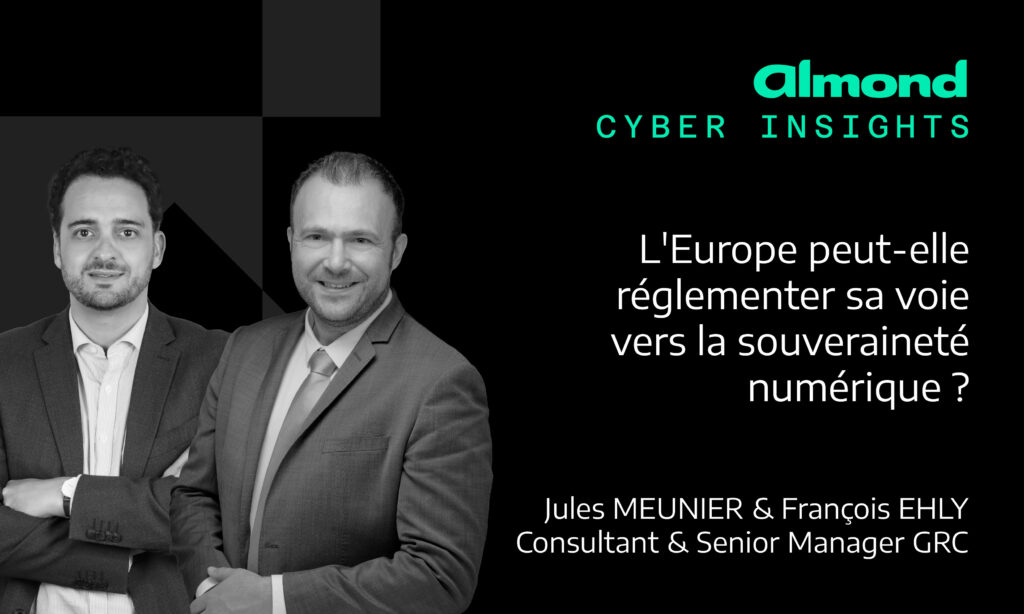
Depuis 2022, l’Union européenne a profondément modifié sa posture dans le cyberespace. En attendant de pouvoir rivaliser industriellement avec Washington et Pékin, Bruxelles transforme elle aussi la régulation en instrument géopolitique.
RSSI : la quête du Graal commence par renoncer à l’outil parfait
Face à la prolifération des plateformes de GRC, de gestion des risques, de conformité ou de pilotage cyber, la tentation est grande de chercher l’outil qui couvrirait tout. C’est souvent le début des désillusions. Dans cet article sous forme de dialogue, deux RSSI confrontent leurs expériences : le bon outillage ne se choisit pas dans un catalogue, mais à partir des usages, des flux de décision et de la capacité de l’organisation à faire vivre ses outils dans la durée.
Trust no one: are one-way trusts really one way?
Domain and forest trusts are a well-known research topic. Rather than revisiting all of its aspects, the present article focuses on one-way trusts: the account used for maintaining the trust between domains can be extracted with a new tool, from the trusting domain and used to authenticate on the trusted domain. Thus, trusted domain objects can be helpful in performing lateral movement across security boundaries within Windows environments.